

Proof of concept for a hypothesis that rapid cycling in a circular form of bipolar disorder is a pathological response to normal lunar cycles in sleep
Wehr, T. A., & Avery, D. H. (2026). Proof of concept for a hypothesis that rapid cycling in a circular form of bipolar disorder is a pathological response to normal lunar cycles in sleep. Molecular psychiatry, 10.1038/s41380-026-03799-7. Advance online publication. https://doi.org/10.1038/s41380-026-03799-7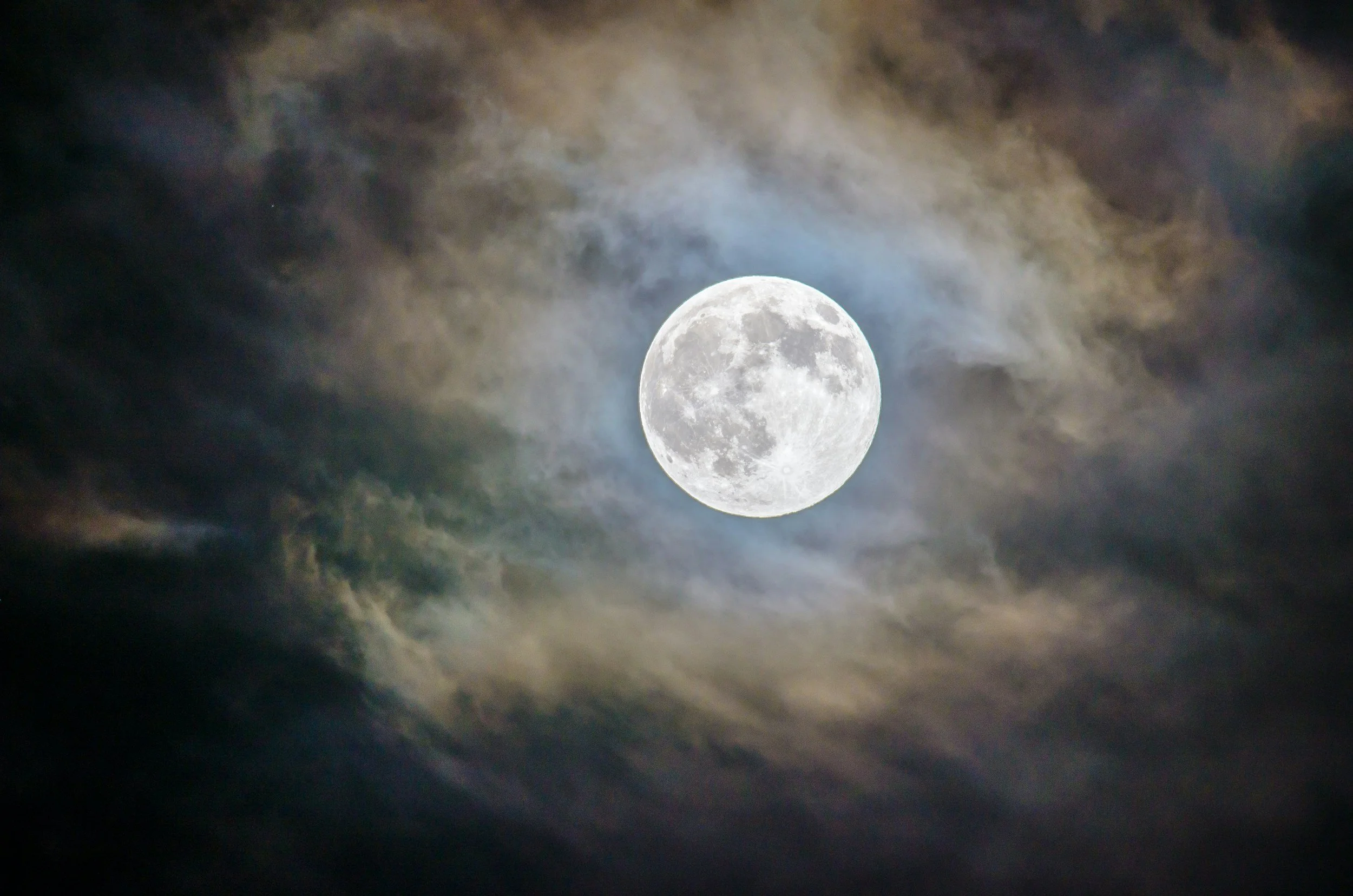
For this season’s journal club, we’re looking at a 2026 paper in Molecular Psychiatry that asks an intriguing question: could lunar cycles influence sleep and, in turn, mood in some people with bipolar disorder?
Bipolar disorder is one of my favourite conditions to work with. It is fascinating, and treatment can be deeply rewarding. At the same time, it can cause considerable disability, particularly when it is misdiagnosed or poorly treated.
Before getting into the science, one feature of the paper caught my eye. The authors disclose using Claude to help develop the analytical pipeline and assist with drafting and interpreting the manuscript. They also make clear that responsibility for the analytical choices and conclusions remains with them. AI is not the focus of the study, but its role here feels very much like a sign of the times.
The authors’ hypothesis draws on several observations. Reduced sleep can precede mania, and experimental sleep deprivation can precipitate mania in some people with rapid cycling bipolar disorder. Other research has reported that sleep in healthy people may become shorter and begin later as a full or new moon approaches. Finally, in an earlier series, manic episodes occurred near full or new moons in 14 of 19 people with a particular pattern of rapid cycling. That is an interesting observation, although the numbers are small.
This paper is presented as a proof of concept. The authors are testing whether sleep patterns in a few people with lunar associated mood cycles resemble the lunar sleep patterns previously described in healthy people. They are not establishing that the Moon causes mania. I enjoy studies like this because they explore how illness might develop, even when the proposed explanation is still a long way from being confirmed.
To investigate, the authors analysed long term, daily sleep records from three people with rapid cycling bipolar disorder whose manic episodes had previously appeared to recur near full or new moons. Two also kept detailed mood records. The records covered 122, 805 and 432 days respectively, across different periods between 1994 and 2022. All three people experienced substantial impairment from their mood episodes but were able to continue recording their sleep.
Here is where psychiatry meets space science. The interval between a new moon and a full moon is about 14.8 days on average, but it is not perfectly fixed. The Moon moves faster when it is closer to Earth and slower when it is farther away. The researchers accounted for those variations when aligning each person’s sleep records with lunar phases.
The analysis is mathematically dense, with several models and graphs comparing sleep, mood and lunar timing. I found parts of it difficult to interpret, and I think that complexity makes the findings harder for a general clinical audience to assess. In broad terms, the authors found a pattern of shorter sleep and later sleep onset around full and new moons that resembled patterns previously reported in healthy people. Their further analyses explored whether changes in sleep preceded changes in mood, whether mania disrupted sleep, or whether the relationship might run in both directions. Those analyses raise questions about timing; they cannot establish causation.
The proposed mechanism also remains uncertain. Moonlight alone seems unlikely to explain a pattern observed around new moons as well as full moons. The authors discuss possibilities involving circadian rhythms and gravitational or tidal influences, but these remain hypotheses. They also consider how differences in biological rhythms might make some people with bipolar disorder more vulnerable to sleep disruption. It is fascinating territory, though I came away wanting a clearer account of how a lunar signal would affect human sleep strongly enough to influence mood.
There are substantial limitations. This was a study of three selected people, all of whom already appeared to have mood episodes associated with lunar phases. The 1,359 recorded days provide valuable detail about those individuals, but they do not turn the study into a large sample of patients. Sleep and mood were self-recorded rather than measured objectively, and all three people were taking psychotropic medication during their observation periods. These findings therefore cannot tell us how common this pattern is, whether it applies to bipolar disorder more broadly, or what causes it.
My view is that this is an imaginative and worthwhile study in a respected journal. I appreciate the care taken with the timing of the lunar cycles, even if some of the modelling is beyond what I can confidently critique. The findings offer a reason to investigate further, ideally with larger samples, prospective tracking and objective sleep measures. They do not yet provide a basis for changing treatment.
In clinical practice, I am more accustomed to exploring how sleep, daylight and seasonal changes relate to mood episodes. I have also heard patients describe apparent lunar patterns, and this paper makes me curious about studying those observations more carefully. I have a soft spot for space science, so the intersection of psychiatry and our wider physical environment is especially compelling to me. For now, I’ll be watching this area with interest—and keeping a healthy dose of scepticism alongside it.